The Dance of Entropy: Entropy’s Dance in a Game of Chance



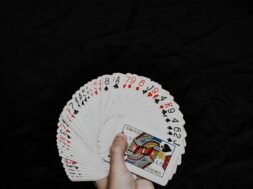

Entropy, often misunderstood as mere chaos, is the mathematical heartbeat of randomness and unpredictability—foundational not only in physics but in the very design of games like Candy Rush. It measures uncertainty, revealing how even seemingly disordered systems follow hidden patterns. In games, entropy shapes player experience by balancing chance with structure, inviting engagement through dynamic, evolving outcomes.
Entropy as a Measure of Randomness and Player Experience
In mathematical terms, entropy quantifies disorder—how spread out values are across a probability distribution. For Candy Rush, each candy spawn is a discrete event influenced by entropy: while individual outcomes appear random, the overall system balances unpredictability with statistical regularity. This duality keeps players engaged, as slight variations in candy types emerge from a foundation of structured randomness.
Entropy isn’t chaos—it’s a structured form of uncertainty. In gameplay, this means players face unpredictable candy combinations, yet over time, aggregate trends reveal stable probabilities. This tension between the local and the global mirrors real-world systems shaped by entropy, where randomness coexists with emergent order.
Taylor Series and Randomness: Bridging Continuity and Discrete Outcomes
Mathematically, Taylor series expand continuous functions into infinite polynomial sums—transforming smooth, unpredictable processes into discrete approximations. This concept illuminates how Candy Rush’s candy combinations arise not from pure randomness but from underlying probabilistic models. Each candy type’s frequency aligns with coefficients in such expansions, revealing how chance emerges from structured mathematical foundations.
- Taylor series approximate random events by linking local behavior to global trends.
- Polynomial expansions help model discrete outcomes from continuous probability spaces.
- This mathematical toolkit mirrors how the game’s mechanics balance randomness with predictable patterns.
Central Limit Theorem: The Emergence of Normality in Discrete Outcomes
The Central Limit Theorem (CLT) reveals how independent candy pick events—each a small random choice—converge toward a normal distribution as sample size grows. Despite individual randomness, long-term trends stabilize, allowing players and designers to anticipate aggregate behavior even amid local unpredictability.
In Candy Rush, the CLT explains why candy color distributions and progression curves often follow a bell-shaped pattern over time. This statistical regularity enables players to recognize patterns, turning chaos into meaningful insight—proving that entropy’s dance maintains order at scale.
| Item | Role |
|---|---|
| Candy spawn probabilities | Stochastic basis shaped by entropy |
| Aggregate candy frequencies | Converge to normal distribution per CLT |
| Long-term game trends | Reveal hidden stability in random outcomes |
Riemann Zeta and the Hidden Structure of Probability
Beyond simple summation, the Riemann zeta function plays a subtle but profound role in probability theory by summing infinite series of probabilities. Its convergence properties reflect the stability of random processes, ensuring that even infinite layers of chance remain mathematically coherent.
In Candy Rush, this deep structure underpins the game’s mechanics—each candy type’s likelihood is woven into a probabilistic framework where zeta-related convergence ensures long-term fairness and balance. The zeta function’s subtle influence reveals how randomness is more than noise; it’s a coded, predictable phenomenon.
Candy Rush: A Modern Stage for Entropy’s Dance
Candy Rush brings abstract entropy to life through colorful, responsive mechanics. Random candy spawns, shifting color patterns, and evolving progression lines visualize entropy and its mathematical roots. The game’s appeal lies in its seamless blend of chance and structure—chaos made tangible, probability made visible.
Entropy visualizes through candy distributions: vibrant reds and yellows cluster unevenly yet stabilize into predictable frequencies. Progression patterns unfold with rhythmic randomness, each level a new dance of uncertainty and order. Players learn to adapt, recognizing patterns not as luck but as mathematical echoes.
Beyond Mechanics: Lessons in Uncertainty and Pattern
Candy Rush exemplifies how entropy teaches adaptation in unpredictable systems. Just as players learn to track candy rarity and drop rates, real-world decision-making demands awareness of hidden order within chaos. The Central Limit Theorem reinforces this: long-term trends emerge even when individual events are random.
The Riemann zeta hints that deep mathematical truths lie beneath intuitive randomness—suggesting that patterns, not pure luck, govern seemingly chaotic systems. This insight transforms gameplay into a gateway for understanding entropy’s universal role.
Why Candy Rush Matters as a Conceptual Playground for Entropy
Candy Rush is more than a game—it’s a vivid, accessible introduction to entropy’s dance. It transforms abstract math into tangible experience, showing how randomness shapes outcomes across scales, from individual candy picks to long-term trends. Players explore probability not as luck, but as a structured, predictable phenomenon rooted in deep mathematical principles.
By integrating Taylor expansions, the Central Limit Theorem, and the Riemann zeta, the game turns chance into a language of patterns. This bridges education and engagement, inviting players to see entropy not as disorder, but as the hidden rhythm of nature and games alike. Visit Das perfekte Spiel für zwischendurch to experience entropy’s rhythm firsthand.
